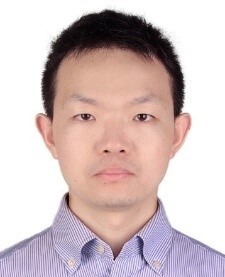
Academic Education & Work Career
Dr. Li joined the Huazhong Agricultural University to conduct postdoctoral research in 2019, and he joined SCBG in 2024 as associate research fellow in the Research Group for Resource Plant and Microbe interactions.
Research Interest
Research interest mainly focuses on the molecular mechanisms of Legume-Rhizobium symbiosis by expertise including biochemistry and molecular biology, molecular genetics, plant physiology, cell biology.
Supported Projects:
The relative researches have been funded by NSFC and the China Postdoctoral Science Foundation.
Publication[1] Li H*#, Ou Y*, Zhang J, Huang K, Wu P, Guo X, Zhu H#, Cao Y#. Dynamic modulation of nodulation factor receptor levels by phosphorylation-mediated functional switch of a RING-type E3 ligase during legume nodulation. Molecular Plant, 2024, 17(7):1090-1109
[2] Li H*, Ou Y*, Huang K, Zhang Z, Cao Y#, Zhu H#. A pathogenesis-related protein, PRP1, negatively regulates root nodule symbiosis in Lotus japonicus. Journal of Experimental Botany, 2024, 75(11):3542-3556
[3] Li H*, Ou Y*, Zhang J, Xiao A, Zhang Z, Cao Y, Zhu H#. Lotus japonicus CIP73 functions as a transcriptional repressor to inhibit Nodule Inception gene expression in nodule symbiosis. Plant and Soil, 2025, 513:2789-2806
[4] Li Z*, Li H*, Tang G, Wu J, Zhang Z, Huang R#, Cao Y#. Heterologous expression of nodulation signaling pathway genes enhances grain yield in rice. Plant Molecular Biology, 2025, 115(6)
[5] Li H*, Chen M, Duan L, Zhang T, Cao Y, Zhang Z#. Domain swap approach reveals the critical roles of different domains of SYMRK in root nodule symbiosis in Lotus japonicus. Frontiers in Plant Science, 2018, 9(697)